
Guide
Financing Used Heavy Equipment With Bad Credit: The 2026 Contractor's Guide
A practical guide to how used construction equipment is evaluated when the credit file is imperfect. Written from a commercial finance broker's perspective, not a lender's.
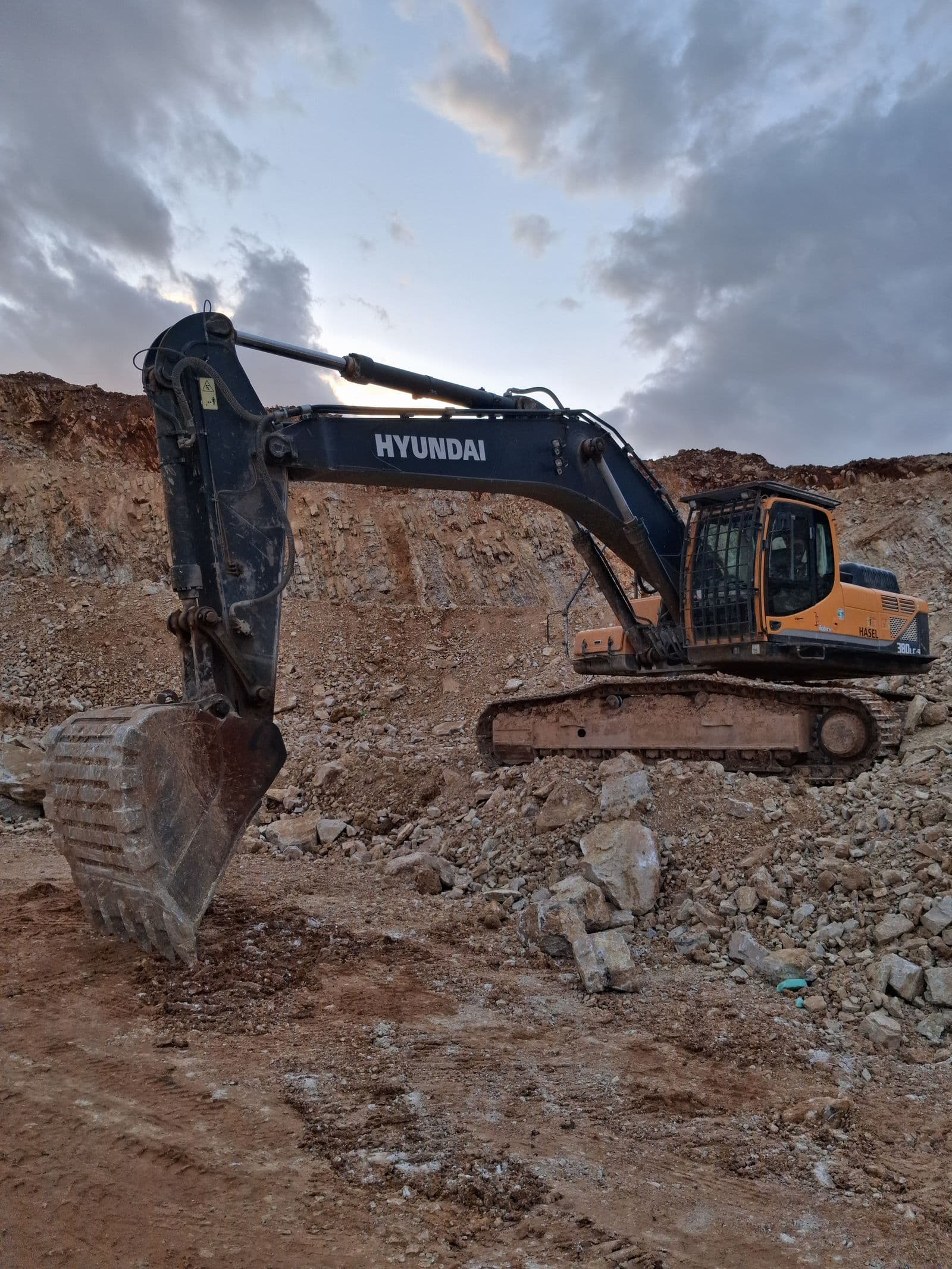
Commercial equipment underwriting looks past a single credit score. Funding partners weigh the business, the machine, the seller, and the structure of the purchase alongside personal and business credit. A contractor with fair, poor, thin, or recently damaged credit can still have a path when the rest of the transaction reduces risk.
This guide explains how financing used heavy equipment with bad credit is evaluated in practice: what funding partners review, which terms matter, how dealer, auction, and private-party purchases differ, what documents and credit explanations help, and how to compare total cost before signing.
It is written for owners and operators rather than finance professionals. Where a term matters, it gets defined.
VeriFunding is not a lender. It does not make credit decisions. This guide covers business-purpose financing for non-titled equipment. Approval, pricing, structure, documentation, and timing are determined by independent funding partners.
One note on scope. The sections covering tax describe general rules published by the IRS. They are not tax, legal, or accounting advice, and how any of it applies to a specific business depends on facts this guide cannot know. Treat those sections as preparation for a conversation with your CPA rather than a substitute for one.
Can you finance used heavy equipment with bad credit?
Yes. Some funding partners consider used-equipment requests from contractors with fair, poor, thin, or recently damaged personal credit. A lower score does not automatically eliminate every option, but it usually changes what the funding partner needs to see elsewhere in the transaction.
That distinction matters because commercial equipment underwriting is broader than consumer credit scoring. A funding partner may review:
- Time in business
- Revenue and bank activity
- Existing debt payments
- Personal and business credit history
- Industry and equipment experience
- The machine's age, condition, and resale market
- The seller and ownership documentation
- The purchase price compared with supportable value
- The requested term and payment
- Available cash for a down payment and operating expenses
Two people with the same score can receive different outcomes because their businesses, machines, and purchase structures are different. See what credit score is needed for equipment financing for a deeper breakdown of how the report and transaction interact.
"Bad credit" is also an imprecise label. FICO's general consumer ranges classify scores below 580 as poor, 580-669 as fair, and 670-739 as good. Commercial funding partners do not have to use those categories, and there is no universal heavy-equipment minimum that applies across the market. A 625 score caused mainly by high credit-card utilization is not the same risk as a 625 score with recent missed equipment payments. A prior bankruptcy followed by years of clean performance is different from an unresolved tax lien or current delinquency.
The explanation does not erase the credit issue. It helps an underwriter determine whether the problem was temporary, whether it has been resolved, and whether the proposed obligation appears manageable now.
A better opening question is not "What score do I need?" It is: "What parts of this transaction reduce risk, and what parts will require stronger documentation, more cash down, or a different structure?" That is the question a useful broker should help answer before sending the request anywhere.
What the 2026 market data actually shows
Equipment finance activity remains substantial in 2026, but strong industry-level numbers should not be confused with an individual approval forecast.
The Equipment Leasing and Finance Association's May 2026 CapEx Finance Index reported $10.2 billion in seasonally adjusted new business volume among participating companies. Year-to-date volume was 11.5% above the same period in 2025, and ELFA projected $128 billion in activity for the full year. The reported average credit-approval ratio was 79.0%, with small-ticket approvals at 80.4%.
Those figures describe the applications received by participating equipment-finance companies. They do not mean that any contractor has an 80% chance of approval. Applicant quality, lender mix, ticket size, repeat customers, equipment type, and pre-screening all affect the reported ratio.
The Federal Reserve Banks' 2025 Small Business Credit Survey provides another useful data point. Among 294 surveyed applicants for an auto or equipment loan, 71% reported full approval, 17% partial approval, and 11% denial. That product category combines vehicles and equipment, relies on a relatively small convenience-sample subgroup, and should not be treated as an underwriting benchmark. It does, however, show why asset-secured financing remains an important part of the small-business market.
The construction backdrop is less uniformly positive. The American Institute of Architects' July 2026 forecast describes a sharply uneven market. Nonresidential building spending declined during the first five months of 2026, while data centers and selected healthcare, public, and technology-related projects remained comparatively strong.
The practical lesson is straightforward: do not justify a machine purchase with a national construction headline. Justify it with your actual work, utilization, margins, rental savings, backlog, and cash flow.
Capital may be available across the equipment-finance market, but funding partners still evaluate whether a specific borrower can support a specific machine.
The terms that actually matter
A few terms explain most of what happens between the first conversation and funding.
Underwriting. Sometimes described as holistic or contextual review, underwriting evaluates the full transaction rather than relying on a score alone. Informally called "story credit," the useful "story" is not a sales pitch. It is a documented explanation of what caused the credit problem, when it happened, what has been resolved, and why the proposed payment appears manageable now. Medical expenses, a failed partnership, customer concentration, or a slow-paying general contractor can provide context. They do not erase the credit issue or guarantee approval.
Loan-to-value. Loan-to-value, or LTV, compares the amount financed with the equipment's supportable value. Purchase price and value are not always identical. A machine may be overpriced, need repairs, or include attachments that do not receive full collateral value. A cash contribution can reduce the lender's exposure and the borrower's payment.
Soft inquiry and hard inquiry. A soft inquiry does not affect a credit score. A hard inquiry is generally associated with an application for credit and may affect the score. The Consumer Financial Protection Bureau explains that hard inquiries are visible to other users of the report, while soft inquiries generally are not. The type of inquiry depends on the funding partner and stage. Ask which company will obtain the report, whether the inquiry is soft or hard, and whether another inquiry may occur later. VeriFunding's initial request does not require an SSN and does not authorize or trigger a credit pull.
Captive and independent financing. A captive finance company is connected to a manufacturer or dealer network and may offer strong promotional terms, especially on new equipment. An independent source or broker can provide additional paths when the machine is used, the seller is outside the captive network, or the credit profile does not fit. Neither is automatically better. Compare the actual terms.
Initial review, conditional approval, and final approval. An initial review identifies a possible path but is not a credit decision. A conditional approval depends on stated requirements such as credit verification, documents, valuation, insurance, and seller review. Final approval and funding occur only after all required documents and closing conditions are satisfied.
How funding partners evaluate a used equipment request
Most reviews can be understood through four categories: the business, the owners, the equipment, and the transaction.
The business
Funding partners may evaluate time in business, revenue, bank activity, existing debt, and how the machine will generate or protect cash flow. A longer history provides more evidence, but some programs consider newer companies when the owners have relevant experience, credit is stronger, or the request is smaller.
Revenue shows scale; cash flow shows payment capacity. Statements may reveal deposit consistency, average balances, overdrafts, returned items, and existing automatic payments. A company can report strong annual sales and still have weak payment capacity if margins are thin or the account repeatedly runs negative.
The equipment should also have a clear operating role. Explain what work it will perform, whether that work is contracted or recurring, whether it replaces rental expense, who will operate it, and what happens if an expected project is delayed.
The owners and guarantors
The review may include personal and business credit, ownership, personal guarantees, relevant experience, and liquidity. The underlying report matters beyond the score: recent equipment delinquencies, collections, revolving utilization, bankruptcies, liens, and judgments can affect a decision differently.
Industry experience can help establish that the owner knows how to use the asset productively. Cash can support a down payment, but the business should retain enough liquidity for insurance, transport, repairs, fuel, labor, and the first payment.
The equipment
A funding partner may review the year, make, model, serial number, hours, condition, maintenance records, remaining useful life, resale demand, parts availability, price, attachments, seller, and lien status. The machine is collateral, but collateral does not replace the need for a supportable payment. The equipment appraisal and valuation process can determine whether the seller's price is supportable and how much of it can be financed.
The transaction
Similar borrowers can receive different outcomes because one transaction is cleaner. Seller type, price, taxes, delivery, cash contribution, requested term, inspection availability, purchase deadline, insurance, and existing liens all matter. A meaningful review normally requires an identified machine and written quote.
When used equipment can strengthen a financing request
Used equipment can improve a request when it lowers the financial burden without creating excessive mechanical or collateral uncertainty.
Lower acquisition cost. A used machine may provide the required capability at a lower price, reducing the payment and leaving more room for payroll, fuel, repairs, materials, and working capital. Compare the full ownership cost, not just the payment: insurance, transport, initial repairs, maintenance, fuel, labor, downtime, and expected resale value.
Earlier depreciation may already be absorbed. A late-model used unit may have passed through the steepest part of its new-equipment depreciation curve, placing the price closer to observable resale value. That is not automatic; an overpriced or poorly maintained used machine can still create a large valuation gap.
Availability and documentation. A machine already available may replace costly rentals or meet a near-term project need. Complete service records, verifiable hours, a clean inspection, and a known operating history can also reduce uncertainty. Good documentation may matter more than a newer model year with unknown maintenance.
When used equipment can make financing harder
Used equipment is not automatically easier to finance.
Older or high-hour machines may support a shorter term, lower financed amount, or additional inspection. Deferred maintenance, structural damage, hydraulic leaks, emissions faults, altered identification plates, or hour-meter discrepancies can reduce value or stop a transaction.
Specialized equipment may be valuable to one contractor but difficult to resell. Attachments can be operationally important without receiving dollar-for-dollar collateral value. The seller's asking price is also not proof of market value; funding partners may compare auction data, dealer listings, appraisals, age, hours, and condition.
Private sales add another layer of verification because the seller, ownership, lien status, condition, and payment instructions must all be confirmed.
Which machines are generally easier to evaluate?
Financeability tends to improve when a machine has a broad buyer base, established valuation data, available parts, and a normal resale channel.
Commonly traded categories include skid steers, compact track loaders, mini excavators, standard excavators, wheel loaders, dozers, backhoes, trenchers, graders, forklifts, telehandlers, and common lifts. A standard machine can still be difficult if it is overpriced, poorly maintained, excessively old, or subject to unclear ownership.
Niche drilling, paving, processing, demolition, or highly customized equipment may require a specialized funding source because valuation and resale are less predictable.
There is no universal "best" age. Late-model used equipment often presents a cleaner valuation and may support a longer term. Older machines may still qualify when condition, service history, price, and remaining useful life are acceptable. Submit all attachments with the original quote; material additions after approval may require another review.
Ownership, serial numbers, and UCC liens
Most skid steers, excavators, loaders, and similar non-road machines do not use a motor-vehicle title. Ownership is commonly established through invoices, bills of sale, serial numbers, and supporting records. Titled vehicles and trailers use separate state procedures and are outside VeriFunding's current equipment-finance scope.
A dealer invoice should identify the buyer, seller, year, make, model, serial number, hours, attachments, price, taxes, delivery, and payment instructions. A private seller may also need to provide a signed bill of sale, original invoice, prior bill of sale, payoff statement, or lien release.
Before submitting, photograph the complete machine and identification plate, confirm the serial number matches the sales documents, and separately identify serialized attachments. A discrepancy can delay or stop the transaction.
A creditor may perfect a security interest in business equipment through a UCC-1 financing statement. Article 9 generally requires filing unless an exception applies. A UCC search may show a specific-equipment lien, a blanket lien, or an old filing that was never terminated. The transaction may require a payoff, release, termination, or subordination before funding. Possession alone does not prove clear ownership.
Dealer, auction, and private-party purchases
Dealer purchase
Dealer transactions are often easier to document because dealers regularly provide invoices, serial-number information, payment instructions, and delivery records. Some also offer warranties or service histories. Dealer financing should be compared, not dismissed. Vendor and dealer referrals can help assemble the equipment documentation that underwriters need.
Auction purchase
Before bidding, confirm the payment deadline, buyer's premium, taxes, inspection rights, final-sale terms, removal deadline, and whether the funding partner will consider the auction. Some auctions require payment too quickly for financing arranged after the bid. An initial borrower review is not approval for an unidentified machine.
Private-party purchase
A private sale may offer a lower price but usually requires more verification. Be cautious when a seller cannot show how the machine was acquired, refuses the serial number, wants payment sent to an unrelated third party, will not allow inspection, or cannot explain an existing lien.
What challenged credit looks like in practice
Online advertisements often imply that almost any score qualifies. Real institutional equipment programs are narrower.
Across VeriFunding's current funding panel, many conventional programs have stated approximate minimums in the high 500s to low 600s, often around 590-625, depending on time in business, transaction size, equipment, and other factors. These are informal panel observations as of July 2026, not a hard floor, not universal industry minimums, and not approval promises.
The practical pattern is:
- A lower score usually requires stronger compensating factors.
- A newer business often needs stronger owner credit than an established business. See also equipment financing for startups.
- Recent equipment or business-credit delinquencies can matter more than older consumer issues.
- More cash down may help, but it does not cure every credit problem.
- Some programs have specific bankruptcy seasoning requirements.
- Very low scores may fall outside VeriFunding's current conventional equipment coverage.
Certain programs on the current panel require a bankruptcy to have been discharged or closed for roughly three years. Other funding sources may use different standards. The only responsible approach is to match the exact dates and transaction against current criteria.
Do not submit broadly in the hope that one source overlooks the problem. Selective placement helps avoid duplicate files, unnecessary inquiries, inconsistent information, and loss of control over the request.
Documents and credit explanations
The exact list varies by transaction. Use the equipment financing documents checklist as a stage-by-stage reference rather than assuming every file needs the same package.
The exact document list depends on the funding partner and transaction.
An initial review generally needs the legal business name, entity type, location, time in business, ownership, estimated revenue, equipment type and use, amount, seller type, approximate credit range, material credit events, and timing. VeriFunding does not require documents or an SSN for the initial request.
Later requests may include:
- Quote, purchase order, invoice, or bill of sale
- Equipment details, photos, inspection, and maintenance records
- Ownership evidence, payoff statement, or lien release
- Formation records, identification, and EIN confirmation
- Three to six months of business bank statements
- Tax returns or interim financial statements
- Debt schedule, contracts, backlog, or letters of intent
- Credit explanation, credit authorization, and insurance
A credit explanation should answer: what happened, when, which obligations were affected, what has been resolved, and what is different now. A short factual version might read: "In 2024, our largest customer postponed two projects for six months. I used personal revolving credit to cover payroll and fell behind on two accounts. Both are now current. We have reduced customer concentration, and recent statements show deposits from four active customers. The excavator will replace recurring rental expense on contracted work."
Keep it factual and short. Do not hide unresolved issues or claim the machine is guaranteed to pay for itself.
Down payments, terms, and total cost
There is no universal down-payment requirement for used heavy equipment with challenged credit. The separate guide to what determines equipment financing down payments explains how credit, value, seller type, and structure change the cash required.
A funding partner may:
- Finance the full approved amount
- Require a cash contribution
- Reduce the approved amount
- Shorten the term
- Require a different machine
- Decline the request
The structure may depend on credit history, time in business, cash flow, average bank balances, existing obligations, equipment age and condition, purchase price compared with value, seller type, transaction size, requested term, and bankruptcy, lien, judgment, or delinquency history.
A down payment can reduce exposure and lower the payment. It should not consume the cash needed to transport, insure, repair, and operate the machine.
Compare total obligation, not only monthly payment
Before signing, understand:
- Cash due at or before closing
- Number and amount of payments
- First payment date
- Documentation, filing, inspection, and legal fees
- Interim rent or partial-period charges
- End-of-term purchase amount
- Early payoff method
- Late fees and default charges
- Insurance requirements
- GPS or tracking requirements
- Total scheduled amount paid
A lower payment may result from a longer term, larger final payment, or lease structure with an additional purchase option. Ask for a plain-language explanation of the full obligation.
Equipment loans, leases, and contract terms
Equipment loan. In a typical secured loan, the business purchases the equipment and the lender takes a security interest. After payoff and lien release, the business continues to own the machine.
Equipment lease. In a lease, the financing party may remain the legal owner during the term. End-of-term options may include a fixed purchase amount, fair-market-value purchase, return, or another stated arrangement. The word "lease" alone does not explain the economics.
Terms to review
Delivery and acceptance. Do not sign an acceptance certificate before verifying delivery and condition. In commercial finance leases, acceptance can trigger an absolute payment obligation even when equipment later proves defective, damaged, lost, or stolen. ELFA describes this as the "hell or high water" obligation.
Automatic renewal and interim rent. Some leases extend automatically unless notice is provided. A lease may also charge rent from funding or acceptance until the regular schedule begins.
Early payoff. "No prepayment penalty" does not always mean all remaining finance charges disappear. Ask for the actual payoff method.
Guarantee, collateral, and insurance. Confirm who guarantees the obligation, whether the lien is limited to the machine, whether broader assets are included, and what insurance is required.
Warranty and seller disputes. The financing source may not be responsible for equipment quality or seller promises. Mechanical disputes and payment obligations are often separate.
For a material transaction, have qualified counsel review terms you do not understand.
The application process, step by step
Step 1: Initial review. Provide basic business and equipment information. The goal is to determine whether a plausible path exists and what additional information may be needed. This is not an approval.
Step 2: Identify the machine. Provide the quote, seller, serial number, hours, condition, and intended use. A meaningful financing review usually requires a specific asset.
Step 3: Credit authorization. If the business chooses to continue and a potential fit exists, the borrower completes the relevant application and authorization. The inquiry may be soft or hard depending on the funding partner. Ask before signing.
Step 4: Underwriting and context. The funding partner evaluates the business, guarantors, equipment, and structure. Credit issues may require a concise explanation and supporting information.
Step 5: Equipment and seller verification. The funding partner may verify machine identity, condition, value, ownership, lien status, seller identity, payment instructions, and insurance.
Step 6: Conditional or final decision. An approval may still contain stipulations. Review the amount, payment, term, cash due, equipment description, and every outstanding requirement.
Step 7: Documentation and funding. After documents and closing conditions are completed, the funding partner generally pays the approved dealer or seller directly.
No broker can responsibly guarantee how long the process will take. A clean dealer transaction may move faster than an older private-party machine requiring inspection, appraisal, and lien resolution.
Dealer financing and the value of a real comparison
Dealer financing can be competitive, especially when supported by a manufacturer promotion. Independent financing can provide alternatives when the dealer's primary source does not fit.
The main benefit of arranging another option is separation. You can evaluate the equipment price and condition separately from the financing cost and structure.
When the purchase and financing are blended into one conversation, it can be harder to determine whether a lower payment comes from a better price, longer term, larger end-of-term obligation, or different financing cost.
Do not claim to be "pre-approved" unless a funding partner has actually issued a conditional or final decision.
A precise statement to a dealer is: "I am comparing an independent financing option. Let's first settle the machine price, condition, and included equipment." Then compare the dealer's actual written offer with the independent option. Use whichever is better for the business.
Warning signs in business financing offers
A legitimate transaction can include disclosed appraisal, inspection, filing, documentation, legal, or other costs. The concern is unclear, nonrefundable, or misleading charges disconnected from a real funding process. VeriFunding does not charge businesses a broker fee.
Watch for:
- Guaranteed approval. A broker that does not make the credit decision cannot guarantee it.
- Misleading "no credit check" claims. The statement may describe only the first step. Ask what happens at formal submission.
- Upfront broker payment without written terms. Be cautious when an intermediary demands a nonrefundable payment before identifying a funding source or providing clear terms.
- Undefined purchase options. If a lease uses fair market value, understand who sets it and how.
- Vague equipment descriptions. The agreement should correctly identify the machine and attachments.
- Pressure to sign incomplete documents. Do not sign blank forms, incomplete schedules, or premature acceptance certificates.
Recent enforcement actions show why scrutiny matters. In 2025, the Federal Trade Commission obtained a final order imposing a $48.28 million judgment and permanently banning Seek Capital and its CEO from offering business financing and related services after allegations involving deceptive claims and charges. The New York Attorney General also announced a $1.065 billion judgment involving Yellowstone Capital, including cancellation of more than $534 million in small-business debt.
Those cases do not mean every nonbank offer is abusive. They show why owners should verify the provider, read the documents, and understand the full cost.
Section 179 and used equipment
Qualifying new and used business equipment may be eligible for the Section 179 deduction when legal requirements are satisfied.
IRS Publication 946 states that, for tax years beginning in 2026, the maximum Section 179 deduction is $2,560,000, subject to a phaseout beginning when qualifying property placed in service exceeds $4,090,000. Other limits and business-use requirements apply.
Financing the equipment does not by itself prevent Section 179 treatment. The result depends on the property, transaction structure, placed-in-service date, business use, taxable income, ownership, and other purchases during the year.
A tax deduction does not make an uneconomic machine affordable. Select the equipment because the operating case works, then have a tax professional determine the treatment.
How to strengthen your request before submitting
- Choose a specific machine. Real underwriting usually requires an asset and quote.
- Verify it early. Confirm the year, make, model, serial number, hours, condition, location, seller, price, service records, and attachments.
- Build the operating case. Estimate payment, insurance, delivery, fuel, maintenance, repair reserve, labor, rental savings, additional production, and utilization.
- Keep liquidity after closing. Do not use every available dollar as a down payment.
- Disclose material issues. Recent delinquencies, bankruptcies, liens, judgments, ownership changes, and unusual bank activity should not appear as surprises.
- Provide complete statements. Missing pages and unexplained transfers create delays.
- Control submissions. Ask which funding partner will receive the file and whether an inquiry may occur.
- Review the seller. A clean approval cannot fix a bad machine, false seller, or unresolved lien.
How VeriFunding works
VeriFunding helps businesses start equipment financing and invoice-factoring requests, organize the needed information, and move a likely-fit request toward selected independent funding partners.
For equipment finance:
- The equipment must be for business use.
- VeriFunding currently focuses on non-titled equipment.
- The initial request does not require an SSN.
- No credit is pulled from the initial intake.
- Documents are not required upfront.
- Credit authorization comes later if the business decides to continue.
- VeriFunding does not charge businesses a broker fee.
- Funding partners make all approval, pricing, and funding decisions.
The process is designed to answer the fit question before forcing the borrower into unnecessary documents or an immediate credit inquiry.
A useful outcome is not always an approval. Sometimes the right answer is that the current transaction does not fit the available panel, which factor is preventing placement, and what would need to change.
To see where you stand, you can start a request or read more on equipment financing.
Final takeaway
Bad credit does not automatically eliminate used heavy-equipment financing. Used equipment also does not automatically create an easy approval.
The strongest request combines:
- A real business need
- A supportable payment
- A clearly identified machine
- Reasonable price and condition
- Verifiable ownership
- Manageable existing obligations
- Honest disclosure of credit issues
- Enough liquidity to operate after closing
Start with the transaction, not the advertised rate. Know the machine. Verify the seller. Understand the total obligation. Keep cash available for operation and repairs. Submit selectively to a program that actually fits.
VeriFunding can review the initial business and equipment information before documents, an SSN, or credit authorization are required. If a plausible path exists, the borrower decides whether to continue with the relevant funding partner's process.
VeriFunding is a commercial financing referral and brokerage service operated by ClearMetric LLC. VeriFunding is not a lender, does not make credit decisions, does not approve or decline financing, and does not guarantee financing, approval, terms, or funding. All financing is provided by independent third-party funding partners and is subject to their approval and terms. VeriFunding does not offer merchant cash advances, sales-based financing, consumer loans, or residential real estate financing. VeriFunding does not charge businesses a broker fee. VeriFunding may be compensated by funding partners on closed financing.
This guide is general information and is not legal, tax, or accounting advice. Tax and accounting rules change and apply differently depending on your circumstances, entity structure, and state. Consult a qualified professional regarding your specific situation.
Frequently asked questions
- What credit score is needed?
- There is no universal minimum. Across VeriFunding's current panel, many conventional programs have stated approximate minimums in the high 500s to low 600s, often around 590-625, depending on the business and transaction. That range is an informal panel observation, not a hard floor, and it changes over time. The full credit report, cash flow, equipment, seller, and structure also matter.
- Can I finance equipment after a bankruptcy?
- Some funding partners consider prior bankruptcies. Certain current programs require roughly three years since discharge or closure; others differ. Disclose accurate dates before submitting.
- How much down payment will I need?
- There is no standard percentage. A funding partner may require no contribution, a modest amount, a substantial amount, or a lower purchase price. Keep enough cash to insure, transport, repair, and operate the machine.
- Is used equipment easier to finance than new?
- Not automatically. Used equipment may help through a lower price and more mature depreciation. New equipment may offer cleaner valuation, warranty protection, dealer support, and captive promotions.
- Can I finance a private-party or auction purchase?
- Possibly. Private sales require seller, ownership, lien, serial-number, condition, and payment verification. Auctions add payment deadlines, buyer premiums, inspection limits, and final-sale terms. Confirm eligibility before committing.
- Do skid steers and excavators have titles?
- Most non-road machines do not use motor-vehicle titles. Ownership is usually documented through invoices, bills of sale, serial numbers, and supporting records. Titled vehicles and trailers are outside VeriFunding's current scope.
- Will starting a VeriFunding request affect my credit?
- No. The initial intake does not authorize or trigger a credit inquiry. A later funding-partner application may involve a soft or hard inquiry, and authorization is requested first.
- How long does financing take?
- There is no guaranteed timeline. A clean dealer transaction may move faster than an older private-party machine requiring inspection, appraisal, or lien resolution.
- Who receives the funding?
- The approved dealer or seller is typically paid directly after closing conditions are satisfied.
- Can taxes, delivery, and attachments be included?
- They may be when clearly itemized and acceptable to the funding partner. Provide a complete quote at the beginning.
- What happens if the machine breaks?
- The payment obligation usually continues. Warranty and seller disputes are generally separate from the finance agreement. Inspect the machine and maintain a repair reserve.
- Is equipment financing better than a merchant cash advance?
- They are different products. Equipment financing is tied to a specific asset and normally uses scheduled payments over a stated term. A merchant cash advance or sales-based product is repaid from future revenue and may create a very different cash-flow burden. VeriFunding does not offer MCAs or sales-based financing.
- Who explains a decline?
- The creditor making the decision generally carries the applicable adverse-action obligation under ECOA and Regulation B. Rules differ by business size and transaction type, but many applicants have a right to reasons or to request them. Ask the creditor for the specific factors.
- Should I wait to improve my credit?
- Waiting may improve the structure if you can reduce balances, correct errors, establish clean payment history, or allow recent delinquencies to age. Waiting can also cost revenue when a supportable equipment need exists now. An initial fit review can help evaluate the tradeoff without a credit pull.