
Guide
Machine Shop Equipment Financing: CNC and Fabrication Guide
Machine shop equipment financing can be used to acquire CNC machines, machining centers, lathes, grinders, EDM equipment, lasers, press brakes, waterjets, robotic cells, and other non-titled production equipment without paying the full purchase price in cash at closing. This guide explains how machine-tool transactions may be evaluated, what buyers and dealers should prepare, where used-equipment and auction deals become more complicated, and which federal tax rules apply to qualifying equipment in 2026.
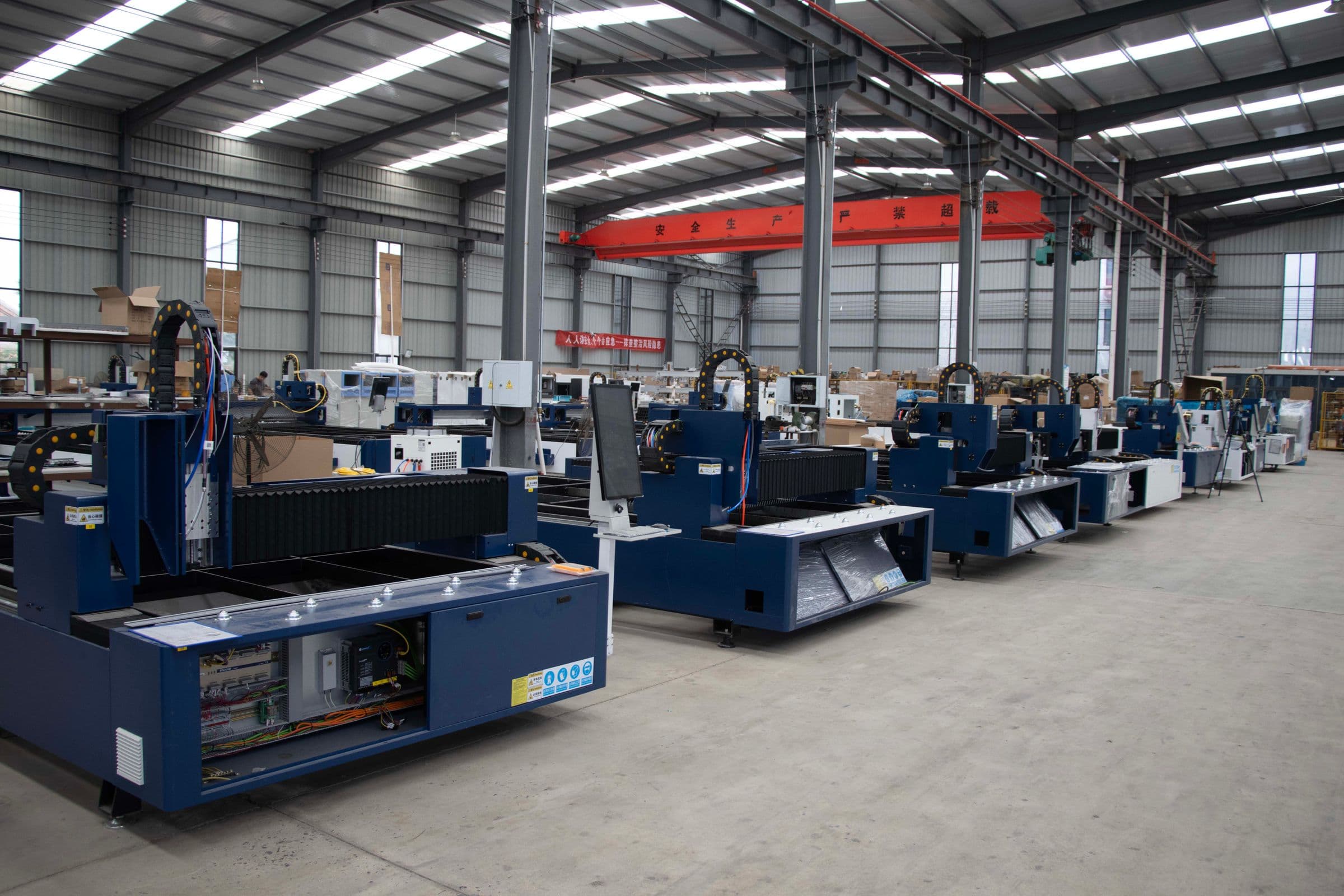
The financing still has to fit the business and the transaction. Funding partners may review the owner, operating history, cash flow, credit, machine, seller, purchase price, requested term, and available cash contribution. There is no universal credit-score cutoff, down-payment percentage, machine-age limit, or term that applies across the market.
That distinction matters in machine tools. A new vertical machining center from an established dealer is a different transaction from an older grinder bought from another shop, a custom automation cell with a long build cycle, or a CNC machine purchased at auction. The equipment can be central to underwriting, but the machine is only one part of the credit decision.
Financing equipment is common across U.S. businesses. The Equipment Leasing & Finance Foundation's 2024 Horizon Report found that 82% of end users who acquired equipment or software in 2023 used at least one form of financing.[1] The survey covers equipment and software users broadly, not machine shops specifically.
This guide is written for owners and operators rather than finance professionals. Where a term matters, it gets defined.
One note on scope. VeriFunding is a commercial finance brokerage, not a lender. This guide covers business-purpose financing for non-titled equipment. Independent funding partners make all approval, pricing, structure, documentation, and funding decisions. The tax section describes general federal rules and is not tax, legal, or accounting advice.
What machine shop and fabrication equipment can be financed?
Machine shop equipment can be financed through several commercial structures. The Equipment Leasing and Finance Association lists manufacturing and industrial machinery among the equipment categories financed by its members.[6] Within VeriFunding's current scope, equipment financing is for business-purpose, non-titled equipment. Specific program eligibility still depends on the funding partner and transaction.
Common requests include:
- CNC vertical and horizontal machining centers
- CNC mills and lathes
- Swiss-type lathes and turning centers
- Multi-axis and mill-turn machines
- Wire and sinker EDM equipment
- Surface, cylindrical, and centerless grinders
- Saws and cutting equipment
- Fiber and CO2 laser systems
- Press brakes and shears
- Plasma and waterjet cutting systems
- Robotic welding and automation cells
- Compressors and supporting shop equipment
- Inspection and metrology equipment
- Material-handling equipment used inside the operation
A funding partner may be comfortable with one category and cautious with another. The machine's age, condition, configuration, resale market, seller, and purchase price can all affect the structure.
For a general explanation of the product, see what equipment financing is.
How machine tool financing works
A clean machine-tool transaction usually starts with a specific piece of equipment and a complete quote. The important distinction is between an initial fit review, a funding partner's underwriting decision, and final funding.
The process often looks like this:
- Identify the equipment and seller. Provide the machine type, new or used condition, year, make, model, purchase price, seller, and intended business use. Serial number and hours or other usage should be included when available.
- Complete an initial review. The business, owner, equipment, seller, transaction size, and timing are screened for a plausible program fit. This is not an approval.
- Authorize the funding partner's review. If the buyer wants to continue, the selected funding partner may request an application, credit authorization, and supporting documents. Underwriting is the funding partner's review against its credit, collateral, capacity, and program requirements.
- Receive a decision and clear stips. A conditional approval may state an amount or proposed structure while remaining subject to documents, insurance, inspection, appraisal, cash contribution, lien resolution, or other stipulations.
- Verify the transaction. Depending on the file, the funding partner may confirm equipment value and condition, seller identity, ownership, liens, insurance, payment instructions, and the final invoice.
- Complete final approval, documents, and funding. Funding occurs only after the funding partner confirms its required conditions are satisfied and the closing documents are completed.
Starting a VeriFunding request does not require an SSN, documents, or credit authorization and does not trigger a credit inquiry. If there appears to be a potential fit and the business chooses to continue, the relevant funding partner may request authorization for a soft or hard inquiry. Ask which company will obtain the report, what type of inquiry it will be, and whether another inquiry may occur later. Learn how soft and hard credit inquiries differ.
What funding partners evaluate on CNC and fabrication equipment
Machine-tool underwriting combines credit analysis with transaction and collateral review. The weighting varies by funding partner.
The business
An established shop can provide operating history that a startup cannot. Time in business is measured from formation, start of operations, licensing, banking, or tax records depending on the funding partner. Underwriters may consider revenue, bank activity, profitability, existing obligations, prior equipment payments, customer concentration, backlog, and whether the proposed payment fits the operation.
For a newer business, the owner may have to carry more of the credit story because there is less business history to evaluate. Relevant industry experience, customer commitments, owner investment, and a reasonable projection can become more important.
The owner and credit profile
There is no universal minimum personal credit score for equipment financing. A stronger file usually opens more programs, while recent delinquencies, repossessions, unresolved tax issues, bankruptcies, or heavy existing debt can narrow the options.
The score itself is only one input. Two owners with the same score can present very different risks based on the underlying report and the business supporting the payment.
See what credit score is needed for equipment financing for a separate breakdown.
The machine
Funding partners may consider:
- Age and remaining useful life
- Condition
- Hours or other usage measures
- Maintenance and rebuild history
- Make and model
- Configuration and attachments
- Parts and service support
- Resale market
- Purchase price compared with supportable value
- Whether the equipment is standard or highly specialized
There is no responsible universal table that says a press brake receives one term, a laser receives another, or a five-axis machining center requires a specific down payment. Those decisions are program-specific.
A recognizable machine with clear market data may be easier to value than a highly customized system with a narrow secondary market, but that does not guarantee better credit terms. The business still has to support the obligation.
The seller
Dealer transactions often provide a cleaner paper trail because established sellers routinely handle invoices, serial numbers, deposits, delivery, and payment instructions.
Private-party and auction purchases can still be financeable. They usually create more verification work because the funding partner may need to establish who owns the machine, whether an existing lien must be paid off, where the equipment is located, and whether the seller and payment recipient match.
The structure
The purchase price is only the starting point. Underwriting may also consider the requested term, amount financed, down payment, first payment, taxes, freight, rigging, installation, trade-in, deposit already paid, and other costs included in the request.
A longer term can lower the scheduled payment. It also has to make sense relative to the machine's remaining useful life and the funding partner's collateral policy.
How a funding partner values the machine
The factors above describe what a funding partner looks at. On the collateral side, the practical question is what value the funding partner can support for the specific machine and transaction.
Purchase price and supportable value are not always the same. Depending on the program and equipment, a funding partner may use market comparisons, dealer or auction data, an internal valuation, a desktop review, an inspection, or a formal appraisal.
Machinery appraisals can also use different premises of value. The American Society of Appraisers publishes definitions that distinguish among several of them.[2]
Fair market value is an opinion of the amount at which property would change hands between a willing buyer and willing seller, with neither under compulsion and both having reasonable knowledge of the relevant facts.
Orderly liquidation value reflects a liquidation sale with a reasonable period to find a buyer, with the seller compelled to sell the property as-is and where-is.
Forced liquidation value reflects a properly advertised public auction in which the seller is compelled to sell with a sense of immediacy, again on an as-is, where-is basis.
A funding partner does not have to use the same value premise or valuation method on every transaction. The applicable method depends on the program, equipment, requested structure, and reason a valuation is being obtained.
This is why secondary-market depth matters. Equipment with active dealer listings, auction history, parts availability, service support, and an identifiable buyer base can be easier to value than a highly customized system with a narrow resale market. That does not guarantee approval or better terms. It gives the funding partner more evidence for the collateral side of the decision.
Configuration matters for the same reason. Two machines with the same base model can differ materially because of control generation, spindle specification, axis configuration, pallet system, tool capacity, probing, automation, or other options.
If an independent appraisal is needed, the Association of Machinery and Equipment Appraisers, an MDNA subsidiary, maintains certified equipment appraisers focused on machinery and equipment.[3]
See equipment appraisal and valuation and loan-to-value for the underlying definitions.
New versus used machine tool financing
New and used machines create different underwriting questions. Neither category is automatically easier.
A new machine may offer a dealer invoice, factory warranty, current specifications, and a cleaner valuation path. The purchase price can also be materially higher, and a custom machine may require deposits or staged payments before delivery.
A used machine may reduce the acquisition cost and can make economic sense when the equipment has substantial remaining life. The funding partner may need more information about condition, hours, rebuilds, ownership, liens, and value.
The practical question is whether the machine is identifiable, supportably priced, suitable for the business, and acceptable under the chosen program.
There is no universal machine-age cutoff
Some programs impose age or term limits. Others will consider older equipment when condition, supportable value, remaining useful life, seller, and the overall credit profile support the request.
Age can also be evaluated in relation to the requested term. A funding partner may consider how much useful life and resale support the machine is expected to have over the proposed financing period. That is one reason an older machine may support a shorter term even when the business and owner are otherwise strong.
A shorter term produces a higher scheduled payment, so buyers sometimes read the structure as a credit issue when the equipment itself may be part of the reason. The funding partner's explanation and approval conditions should make that distinction clear.
A statement such as "machines older than 10 or 15 years cannot be financed" is too broad. The same applies to spindle-hour thresholds. Hours can matter when they provide evidence about condition and remaining life, but there is no single market-wide number that decides the transaction.
Rebuild and maintenance records can matter
If a used machine has undergone a spindle rebuild, control upgrade, major service, or other work that materially affects condition, keep the invoice and service record. The funding partner or appraiser can decide how much weight to give it.
A maintenance record is evidence. It does not automatically increase the approved value or override a program's age restrictions.
Dealer, private-party, and auction purchases are different transactions
Seller type changes the documentation and closing risk.
Buying from a machine tool dealer
A useful dealer quote should identify the complete transaction. It should clearly show the seller, buyer if known, machine description, price, and amount due. When applicable, include the year, make, model, serial number, taxes, freight, rigging, installation, training, warranty, trade-in, deposit, and delivery terms.
A financing request can be delayed when the approved machine changes after underwriting or when the final invoice contains costs that were never included in the original quote.
Buying from another shop or private seller
Private-party transactions may require additional evidence of ownership and payment authority. Depending on the funding partner and facts, the file may need a bill of sale, prior purchase documentation, payoff statement, lien release, photos, serial-number plate, inspection, maintenance records, or seller verification.
Do not treat a UCC review as a serial-number title search. Under Article 9 of the Uniform Commercial Code, a financing statement identifies the debtor and secured party and indicates the collateral it covers. The collateral indication can be broad enough to cover all assets or all personal property.[4] Texas reflects the debtor-name framework in practice: its Secretary of State UCC search instructions direct users to search by filing number, debtor, or secured party, with a debtor search based on the debtor's individual or organization name.[5]
Two consequences follow for a used-machine buyer. A serial-number search is not a reliable substitute for a debtor-name UCC review. A machine also can fall within a broader equipment or blanket collateral description without being listed individually by serial number.
A UCC search is therefore not the same as proving that a particular machine is unencumbered. A filing may be active but no longer cover the machine, or an existing secured party may still have an interest that must be addressed.
The correct search jurisdiction also depends on the seller's legal form and the Article 9 debtor-location rules. A registered organization organized under state law is generally located in that state for Article 9 purposes, while individuals and other organizations follow different location rules.[4] A funding partner, attorney, or qualified search provider can determine the appropriate search and the payoff, release, termination, subordination, or other documentation required for the transaction.
See UCC-1 financing statement for the underlying definition.
Buying at an industrial auction
Auction financing has one additional problem: the buyer can become contractually committed before the financing is ready.
Payment deadlines, buyer's premiums, taxes, accepted payment methods, inspection rights, removal deadlines, rigging requirements, and other conditions are set by the individual auction. The terms attached to the specific sale govern, and they should be reviewed before bidding.
Before bidding, confirm:
- The payment deadline
- The buyer's premium
- Sales-tax treatment
- Accepted payment methods
- Inspection or power-up rights
- Whether the equipment is sold as-is and where-is
- Removal and rigging deadlines
- Whether the funding program accepts auction purchases
- Whether the buyer's premium, taxes, or other charges can be included in the financed amount
- Whether the exact lot has been reviewed for program fit
Do not assume a prequalification or initial review is a commitment to fund any lot you win. The funding partner may still need the exact machine, invoice, seller or auction information, value, insurance, credit authorization, and closing conditions.
If financing is necessary to complete the purchase, discuss the prospective lot before bidding and understand what has and has not been approved.
Finance the complete machine purchase, not an incomplete quote
The machine price is not always the amount required to put the asset into production.
A CNC or fabrication purchase may also involve freight, rigging, installation, electrical work, tooling, fixtures, software, training, taxes, accessories, inspection, or other project costs. These amounts can be material, and funding programs do not treat every cost the same way.
The reason is practical. The machine itself is an identifiable asset with a resale market. Freight, foundation work, training, and some software or installation costs may have little or no independent collateral value once spent. A funding partner may include some of those costs, limit them, exclude them, or require a larger cash contribution depending on the program and transaction.
There is no universal "20% to 25% soft-cost rule" across equipment finance. If a funding partner publishes a limit, it applies to that program. It should not be presented as an industry standard.
The best approach is to itemize the complete transaction before underwriting begins.
| Cost item | Quote separately? | Why it matters |
|---|---|---|
| Base machine | Yes | Core financed asset |
| Options and attachments | Yes | May affect value and equipment description |
| Freight | Yes | Program treatment varies |
| Rigging | Yes | Can be material and has little standalone collateral value |
| Installation | Yes | May be treated differently from machine value |
| Tooling and fixtures | Yes | Program treatment varies |
| Software | Yes | Eligibility can depend on how it is sold and structured |
| Training | Yes | Has little independent collateral value |
| Taxes | Yes | Funding treatment varies by transaction |
| Trade-in | Yes | Changes net purchase price and may involve an existing payoff |
| Deposit already paid | Yes | May affect cash due and reimbursement treatment |
A buyer should know what cash will still be required after the approved financing amount is determined. The separate guide to equipment financing down payments explains why purchase price, supportable value, and amount financed can be different numbers.
Long-lead machines, deposits, and progress payments
Custom machining systems, automation cells, imported equipment, and made-to-order machines can require deposits before shipment. The finance structure should be discussed before the buyer makes a large nonrefundable commitment.
Progress-payment programs exist in equipment finance, but the mechanics are not standardized. A funding partner may require an executed purchase order, manufacturer verification, milestone evidence, additional documentation, or a specific funding structure. Some programs will not fund progress payments at all.
If the purchase requires progress payments, confirm that capability before signing a nonrefundable deposit or build contract. It is a program-specific feature and should not be assumed to be available through every funding source.
Do not assume that:
- A deposit already paid will be reimbursed
- The funding partner will advance money before delivery
- Payments will be interest-only during the build
- The funding partner will accept the manufacturer's milestone schedule
- Final funding will occur before installation or acceptance
- A long lead time will preserve an approval indefinitely
The purchase contract and finance agreement need to work together.
A delivery and acceptance certificate also deserves care. If the closing package asks the buyer to certify that equipment was delivered and accepted, the buyer should confirm that the statement is true before signing. The exact legal effect depends on the agreement.
Equipment loan, EFA, or lease?
The label on the product does not tell you the full economics.
Equipment loan
The business purchases the equipment and the lender typically takes a security interest in the financed asset. The agreement establishes the payment obligation, collateral, interest or finance charge, default rights, and payoff terms.
Equipment finance agreement
An equipment finance agreement, or EFA, is a commercial financing contract used to finance equipment. The agreement, rather than the label, controls the payment schedule, finance charge, collateral, ownership language, early-payoff rights, and other obligations.
Equipment lease
Under a lease, the business obtains the right to use the equipment under the contract. Depending on the structure, end-of-term options may include return, renewal, a fixed purchase option, or a fair-market-value purchase option.
For federal tax purposes, the product label does not control the result by itself. The IRS says whether an agreement is a lease or a conditional sales contract depends on the agreement and the surrounding facts and circumstances.[10] Accounting treatment can differ from tax treatment, so have the actual contract reviewed when either result matters.
Before comparing offers, write down the full economics and obligations. ELFA's current end-user guidance similarly recommends reviewing total payments and costs, early termination, equipment obligations, end-of-term options, return procedures, and possible extra charges.[7]
Write down:
- Cash due at signing
- Number and amount of payments
- Total scheduled payments
- End-of-term purchase or return obligation
- Early-payoff formula
- Documentation and filing charges
- Personal guarantee
- Collateral description
- Insurance requirements
- Late charges and default provisions
- Automatic renewal or notice requirements
A lower monthly payment can be paired with a larger end-of-term obligation. Compare the full contract economics.
Can a startup machine shop finance equipment?
Some funding partners consider startups and newer machine shops. The lack of operating history makes the file more dependent on the owner, the business plan, the machine, customer demand, and available cash.
A startup request may be supported by:
- Relevant machining or fabrication experience
- Owner credit
- Owner cash investment
- Customer contracts, purchase orders, or letters of intent
- Realistic projections with stated assumptions
- Evidence that the machine replaces outsourced work or recurring rental expense
- A supportable equipment price
- A credible dealer or seller
There is no universal startup down payment. One program may require a contribution while another may structure the same request differently.
The full startup equipment financing guide covers this separately, and can a new business finance equipment with no revenue history addresses the pre-revenue case.
What if the owner has challenged credit?
Challenged credit does not produce one automatic answer. It can reduce the number of available programs and increase the importance of the rest of the file.
Funding partners may distinguish between older resolved problems and current unresolved risk. A discharged bankruptcy, an old collection, high card utilization, a recent equipment repossession, and current delinquency are different facts even when two borrowers have similar scores.
A cash contribution can help by reducing the amount financed. It does not fix an unaffordable payment, an unresolved lien, unclear ownership, or a machine that the funding partner will not accept.
The best initial review is specific. Provide the approximate credit range and disclose material bankruptcies, repossessions, judgments, tax liens, or current delinquencies before the file is routed.
What documents should a machine shop prepare?
The exact list depends on the transaction. A buyer should not assume that every funding partner requires two years of tax returns or that every smaller transaction is application-only.
For the initial review, the most useful information is usually:
- Legal business name and state
- Time in business
- Ownership
- Estimated annual revenue
- Equipment type and intended use
- New or used condition
- Year, make, and model if known
- Purchase price
- Seller type
- Requested timing
- Available cash contribution
- Approximate owner credit range
- Material recent credit events
If the request proceeds, the funding partner may ask for bank statements, tax returns, financial statements, debt schedules, contracts, equipment records, ownership documents, inspection, appraisal, payoff information, identity documents, or insurance.
For a stage-by-stage list, use the equipment financing documents checklist.
The dealer quote can make the financing easier or harder
For machine-tool dealers, the quote is one of the most useful documents in the file.
A complete quote should identify, where applicable:
- Dealer legal name and address
- Buyer legal business name
- Year, make, and model
- Serial number
- New, used, demo, or refurbished condition
- Hours or usage
- Base price
- Options and attachments
- Tooling or fixture package
- Software
- Freight
- Rigging
- Installation
- Training
- Warranty
- Taxes
- Trade-in allowance
- Deposit already paid
- Final amount due
- Delivery estimate
- Dealer contact for funding coordination
Separating these line items gives the funding partner a clean view of the machine and the non-equipment costs. It also reduces the chance that the approved amount no longer matches the final invoice.
If the buyer changes from one machine to another after approval, expect the funding partner to review the replacement asset.
Dealer pre-flight checklist before you refer the buyer
A dealer does not need to underwrite the customer. The useful job is to make sure the transaction itself is clear before the financing review starts.
Before sending a referral, confirm:
- The exact machine the buyer intends to purchase
- Whether it is new, used, demo, refurbished, or sold as-is
- Year, make, model, and serial number when available
- The complete quote, including separately stated freight, rigging, installation, tooling, software, training, taxes, and other charges
- Any deposit already paid and whether it is refundable
- Any payment, auction, delivery, or removal deadline
- Whether the seller is a dealer, auctioneer, private party, or another business
- Any trade-in and whether money is still owed on it
- Any known change expected before closing, such as a machine substitution or revised configuration
- The buyer's permission to make the financing introduction
This is not an underwriting checklist. It prevents basic transaction facts from changing after a funding partner has already reviewed the file.
Financing approval is not a machine inspection
A financing decision answers whether a funding partner is willing to finance a transaction under its terms. It does not tell the buyer whether a used machine is mechanically sound, correctly configured for the work, supported by the OEM, or worth the asking price.
That distinction is especially important for private-party and auction purchases. A funding partner may request an inspection or valuation for its own underwriting, but the buyer should still perform the technical and commercial due diligence appropriate to the purchase. Financing does not replace inspection, warranty review, service-history review, or seller due diligence.
2026 Section 179 and bonus depreciation rules
Tax treatment should be evaluated after deciding that the machine makes economic sense for the business.
For tax years beginning in 2026, the maximum Section 179 expense deduction is $2,560,000. That limit is reduced by the amount by which the cost of Section 179 property placed in service during the tax year exceeds $4,090,000. Section 179 is also subject to a taxable-income limitation and other eligibility rules.[8]
Machinery and equipment can qualify as Section 179 property when the statutory requirements are met. For depreciation purposes, the IRS generally treats property as placed in service when it is ready and available for a specific business use. Ordering or paying for a machine is not by itself the same as placing it in service.[8]
Current federal law also provides a 100% additional first-year depreciation deduction for certain qualified property acquired and placed in service after January 19, 2025, subject to the statutory requirements. Qualified property can include certain used property as well as new property.[9]
These rules do not mean every financed machine produces the same deduction. Eligibility, business use, placed-in-service date, taxable income, elections, entity-level rules, and the terms of a lease or finance agreement can change the result.
A buyer considering Section 179 or bonus depreciation should have its CPA review the specific transaction before relying on a projected tax benefit.
What machine shop buyers should compare before signing
Approval is only one part of the decision.
Compare:
- Total cash required. Include deposit, first payment, taxes, freight, rigging, insurance, and anything excluded from financing.
- Payment and term. Confirm the exact schedule rather than comparing only the advertised monthly amount.
- Early payoff. Some commercial finance contracts calculate payoff differently from a simple-interest bank loan.
- End-of-term obligation. This is especially important on leases.
- Collateral. Determine whether the lien is limited to the financed machine or reaches other business assets.
- Personal guarantee. Confirm who is guaranteeing the obligation.
- Insurance. Determine the required coverage and loss-payee language before closing.
- Machine acceptance risk. Financing does not replace inspection, warranty review, or seller due diligence.
- Prepayment and default terms. Read the agreement before assuming you can refinance or pay off early without cost.
- Tax assumptions. Confirm them with a qualified tax professional.
A machine that increases capacity can still be a poor purchase if the payment is too aggressive for the shop's actual backlog and cash flow.
When equipment financing may be a good fit
Equipment financing may be useful when a business needs a productive asset but wants to preserve cash for payroll, materials, tooling, insurance, and operating reserves.
It can also make sense when the useful life of the machine supports paying for it over time and the expected operating benefit justifies the total financing cost.
When it may not be a good fit
Financing may be a poor fit when:
- The shop cannot support the payment without assuming new work that is highly uncertain
- The machine is materially overpriced
- The buyer has no cash left for installation, tooling, repairs, or working capital
- The equipment is in poor or unverified condition
- The seller cannot establish ownership or resolve an existing lien
- The buyer is relying on an unconfirmed tax deduction to make the economics work
- An auction or deposit deadline arrives before financing conditions can be satisfied
- The contract has end-of-term or early-payoff terms the buyer does not understand
The financing should support a sound equipment purchase. It should not rescue a transaction that fails on its operating economics.
How dealers can reduce financing delays
Machine-tool dealers can improve the handoff without becoming underwriters.
Send the complete quote early. Identify soft costs separately. Tell the finance source whether the machine is new, used, demo, rebuilt, or sold as-is. Flag any deadline, deposit, trade-in, or planned machine substitution. Provide the serial number as soon as it exists. Keep the buyer and finance contact aligned when delivery dates change.
For a buyer who was declined by a captive or primary bank, it also helps to provide the reason if the buyer has it. "Declined" alone gives the next funding source little information. A credit issue, startup status, transaction size, machine age, seller type, or documentation problem may point to a different path.
VeriFunding's dealer program is designed as a second financing path rather than an exclusive replacement for a dealer's existing lender relationships. Dealers can send the opportunity and quote, and VeriFunding handles the financing file through its independent funding partners. VeriFunding does not charge the dealer or buyer a broker fee. Funding partners make the credit, pricing, and funding decisions.
Next step
If you are buying a CNC or fabrication machine, start with the equipment quote and basic business information. VeriFunding can review the request against current funding-partner programs before you gather a full document package or authorize a credit inquiry.
A useful outcome is not always an approval. Sometimes the right answer is that the current transaction does not fit the available panel, which factor is preventing placement, and what would need to change.
To see where you stand, you can start a request or read more on equipment financing.
If you sell machine tools and want a second financing path for buyers your primary source cannot approve, see financing for equipment dealers.
VeriFunding is a commercial financing referral and brokerage service operated by ClearMetric LLC. VeriFunding is not a lender, does not make credit decisions, does not approve or decline financing, and does not guarantee financing, approval, terms, or funding. Financing is provided by independent third-party funding partners and is subject to their approval and terms. VeriFunding does not offer merchant cash advances, sales-based financing, consumer loans, or residential real estate financing. VeriFunding does not charge businesses a broker fee and may be compensated by funding partners on closed financing.
This guide is general information and is not legal, tax, or accounting advice. Tax and accounting rules change and apply differently depending on the transaction and business. Consult a qualified professional regarding your specific situation.
Sources
- Equipment Leasing & Finance Foundation, Equipment Finance Industry Horizon Report 2024, released October 28, 2024. https://www.leasefoundation.org/industry-research/horizon-report/
- American Society of Appraisers, Definitions of Value: Machinery and Technical Specialties. https://www.appraisers.org/disciplines/machinery-technical-specialties/appraiser-resources/definitions-of-value
- Machinery Dealers National Association, MDNA Subsidiaries: Association of Machinery and Equipment Appraisers. https://mdna.org/about-us/mdna-subsidiaries/
- Uniform Commercial Code Article 9, including §§ 9-502, 9-504, and 9-307, Legal Information Institute, Cornell Law School. https://www.law.cornell.edu/ucc/9
- Texas Secretary of State, UCC Filing How-To Guides. https://www.sos.state.tx.us/ucc/ucc-filing-instructions.shtml
- Equipment Leasing and Finance Association, Industry Overview. https://www.elfaonline.org/research/industry-overview
- Equipment Finance Advantage / Equipment Leasing and Finance Association, 10 Questions to Ask Before Financing Equipment. https://www.equipmentfinanceadvantage.org/ef101/10qs.cfm
- Internal Revenue Service, Publication 946, How To Depreciate Property, including 2026 Section 179 limits and placed-in-service guidance. https://www.irs.gov/publications/p946
- Internal Revenue Service, Treasury, IRS issue guidance on the additional first year depreciation deduction, January 14, 2026. https://www.irs.gov/newsroom/treasury-irs-issue-guidance-on-the-additional-first-year-depreciation-deduction-amended-as-part-of-the-one-big-beautiful-bill
- Internal Revenue Service, Income & Expenses 7: Lease or Conditional Sales Contract. https://www.irs.gov/faqs/small-business-self-employed-other-business/income-expenses/income-expenses-7
Frequently asked questions
- What credit score do you need to finance a CNC machine?
- There is no universal minimum. The funding partner may consider the full consumer and business credit profile along with time in business, cash flow, existing obligations, equipment, seller, down payment, and requested structure.
- Can an older CNC machine be financed?
- Possibly. Machine-age rules vary by program. Depending on the funding source and transaction, older equipment may lead to a shorter term, stronger valuation support, inspection, additional documentation, or more cash contribution. Some programs may decline it based on age alone.
- Can a startup finance a CNC machine?
- Some programs consider startups. Owner credit, industry experience, cash investment, customer demand, equipment value, and transaction size may carry more weight when the business has little operating history.
- Why might the approved amount be less than the purchase price?
- The funding partner may support a value below the seller's price, exclude certain soft costs, require a cash contribution, or approve a smaller exposure based on the credit and transaction. Purchase price, supportable value, and amount financed are separate numbers.
- Can freight, rigging, tooling, and installation be financed?
- Sometimes. Program treatment varies by cost type and transaction. Itemize each cost on the quote instead of assuming it will be included.
- Can I finance a machine bought at auction?
- Possibly. Confirm the exact lot, payment deadline, buyer's premium, taxes, removal terms, and funding-partner requirements before bidding. An auction win can create an obligation before financing is complete.
- Can I finance a machine from another shop?
- Possibly. Private-party transactions can require additional seller, ownership, lien, serial-number, inspection, and payment verification.
- Does VeriFunding pull credit when I start a request?
- No. VeriFunding's initial request does not authorize or trigger a credit inquiry. If the business chooses to continue with a funding partner, VeriFunding explains the next document and credit-authorization requirements before submission.
- Does equipment financing qualify for Section 179 in 2026?
- Qualifying equipment may be eligible. For tax years beginning in 2026, the Section 179 maximum is $2,560,000 and the phaseout threshold begins above $4,090,000, subject to the taxable-income limit and other rules. The business should confirm its specific tax treatment with its CPA.
- Is a $1 buyout lease always better for a machine I plan to keep?
- No. Compare the full economics and tax treatment of the actual agreement. A nominal purchase option can be relevant, but the product label alone does not tell you the total cost, early-payoff method, collateral, tax ownership, or accounting result.
- How can a machine tool dealer refer a buyer to VeriFunding?
- A dealer can send the buyer through its dealer link or provide the opportunity with the buyer's permission. VeriFunding collects the financing information, works the file through a selected funding partner, and keeps the dealer informed on the status.